Technique
Sheet-Pan Dinners: Browning, Not Steaming
Why some sheet-pan dinners come out pale and soggy, and the five habits that give you crisp, browned vegetables and properly cooked meat or fish.
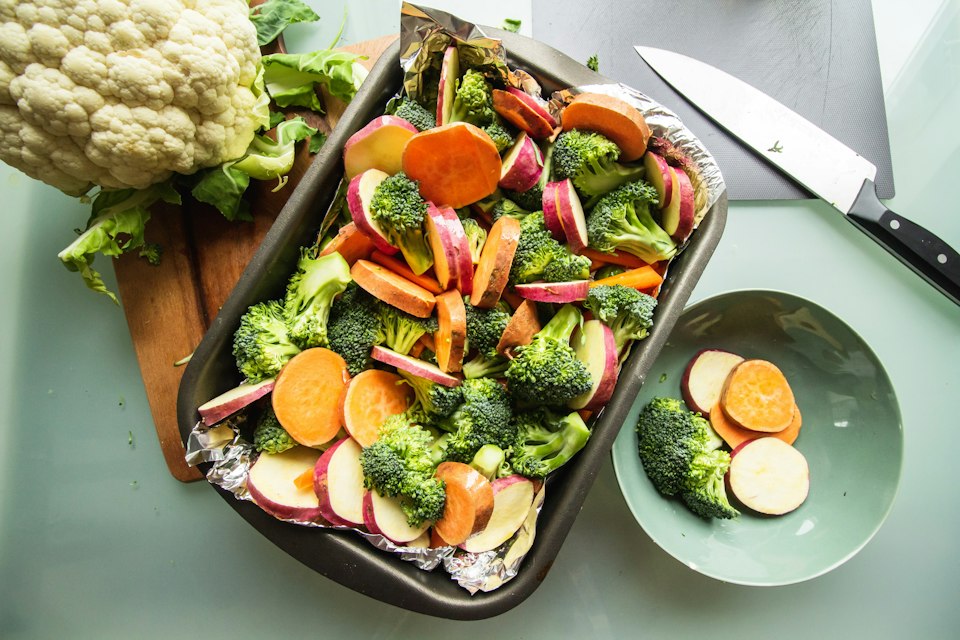
Sheet-pan dinners promise one pan and little washing up. When they go wrong, it is almost always the same problem: the food steams in its own moisture instead of roasting. Browning needs dry heat on a dry surface. These habits make that happen.
1. Give everything space
Vegetables release water as they cook. Spread out, that water evaporates. Piled up, it pools and everything stews. Arrange food in a single layer with a little space between pieces, as in the photo above. If it does not fit, use two pans and swap their positions halfway through.
2. Use a hot oven
Most sheet-pan recipes work best between 400 and 425°F (200 to 220°C). Lower temperatures cook food through before the outside has a chance to brown. Let the oven heat fully before the pan goes in.
3. Dry and oil the food
Pat washed vegetables and meat dry with a towel. Then toss them with enough oil to coat lightly, roughly 1 tablespoon per pound (450 g) of vegetables. Oil conducts heat to the surface; too much and the food fries and turns greasy.
4. Match the timing to the ingredient
Not everything cooks at the same speed. Cut ingredients that share the pan to a similar size, or stagger them:
| Ingredient | Time |
|---|---|
| Halved baby potatoes, 1-inch squash cubes | 30 to 40 min |
| Bone-in chicken thighs | 35 to 40 min |
| Carrots, onion wedges | 25 to 30 min |
| Broccoli florets, bell peppers | 15 to 20 min |
| Green beans, asparagus | 10 to 15 min |
| Salmon fillets, about 1 inch thick | 10 to 12 min |
Times vary with size and oven, so treat them as a guide and check for doneness. Meat and fish should reach a safe internal temperature: see our safe cooking temperatures guide.
5. Leave it alone
Put potatoes and halved vegetables cut-side down, and do not stir for the first 15 to 20 minutes. Food releases from the pan on its own once a crust forms.
About the pan
A heavy, light-coloured rimmed baking sheet, about 18 by 13 inches (46 by 33 cm), browns evenly without scorching. Parchment paper helps with clean-up but check the box for its maximum temperature; many are rated to around 425°F (220°C).
Put it into practice with our lemon garlic chicken thighs or Dijon salmon with green beans.
Recipes from this article
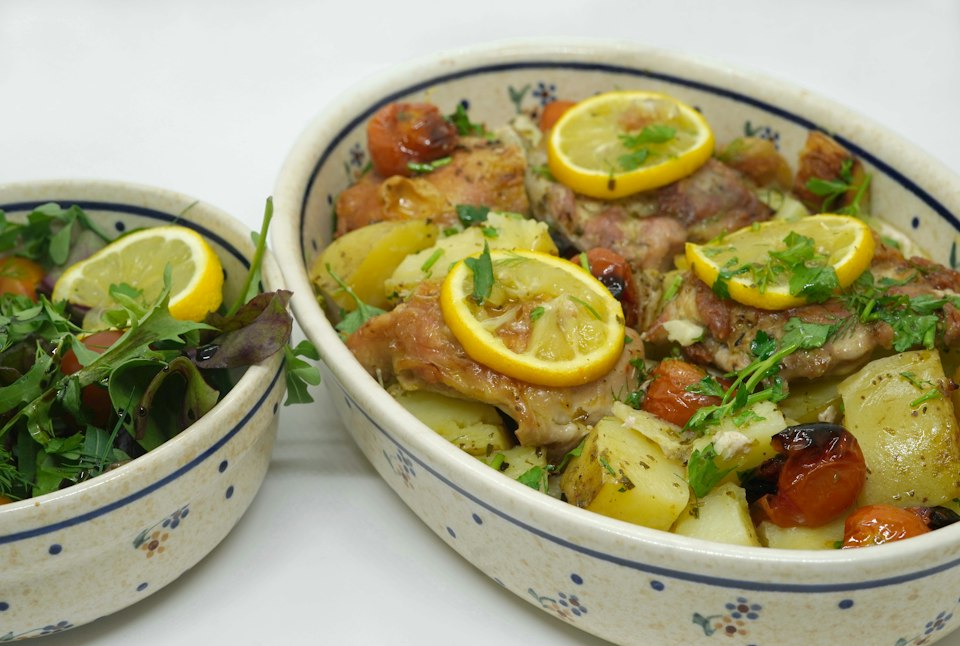
Sheet-Pan Lemon Garlic Chicken Thighs
Crisp-skinned chicken thighs roasted on one pan with baby potatoes, lemon, garlic and oregano. About 45 minutes, start to finish.
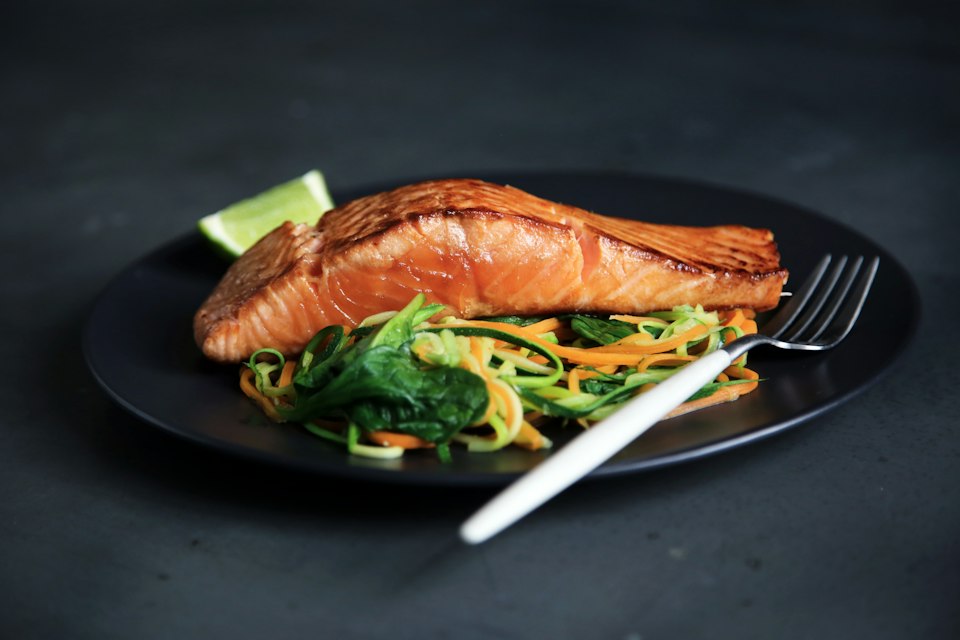
Sheet-Pan Dijon Salmon with Green Beans
Salmon fillets with a honey-Dijon glaze, roasted on one pan with garlicky green beans. On the table in about 25 minutes.
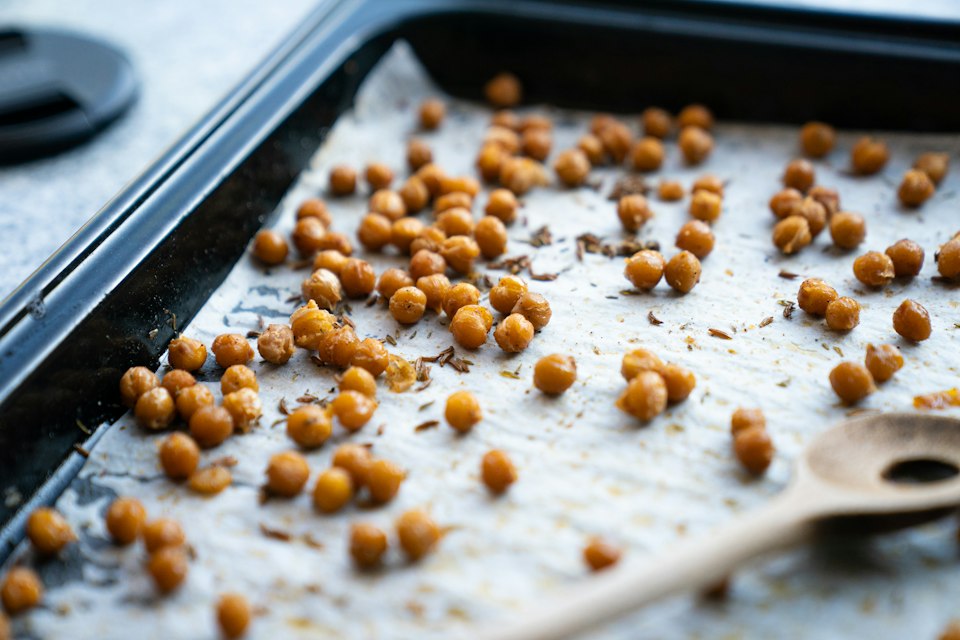
Crispy Roasted Chickpeas
Crunchy oven-roasted chickpeas seasoned with smoked paprika, garlic and cumin. A pantry snack in about 35 minutes.
More from the blog
How to Cook Rice on the Stove (Fluffy Every Time)
How to cook rice on the stove: water ratios for white and brown rice, timing, why resting matters, and how to store cooked rice safely.
How to Hard Boil Eggs That Are Easy to Peel
How to hard boil eggs with tender whites and no green ring, two reliable methods, a timing chart for soft to hard yolks, and tips for easy peeling.