Technique
Scaling a Recipe Up or Down
What changes, and what does not, when you double or halve a recipe: ingredients, pan sizes, cooking times, seasoning and leavening.
Every recipe on this site has a servings control that multiplies each ingredient for you. The arithmetic is exact. Cooking does not always scale as neatly, so here is what to watch for.
What scales cleanly
- Soups, stews, curries and sauces scale well in either direction, as long as your pot is big enough.
- Salads, dressings, drinks and marinades scale exactly.
What needs judgement
- Pan size: doubling a sheet-pan dinner usually needs two pans. Crowding traps steam, so food stews instead of browning.
- Cooking time: a larger volume of soup takes longer to come to a simmer, but simmering time stays about the same. A deeper baking dish needs more time; check doneness rather than relying on the clock.
- Salt and strong spices: scale them, but taste before adding the full amount. You can always add more.
- Baking: cookies scale well because each one bakes individually. Cakes and breads depend on pan size and chemistry, so we do not recommend scaling them more than double or less than half.
- Eggs: when a scaled amount lands on part of an egg, beat the egg and measure: one large egg is about 3 tablespoons (50 g) out of its shell.
Rounding
The scaler shows common kitchen fractions (⅛, ¼, ⅓, ½, ⅔, ¾) and rounds metric weights to practical amounts. For baking, switch to metric and use a scale for the most accurate results.
Put it into practice
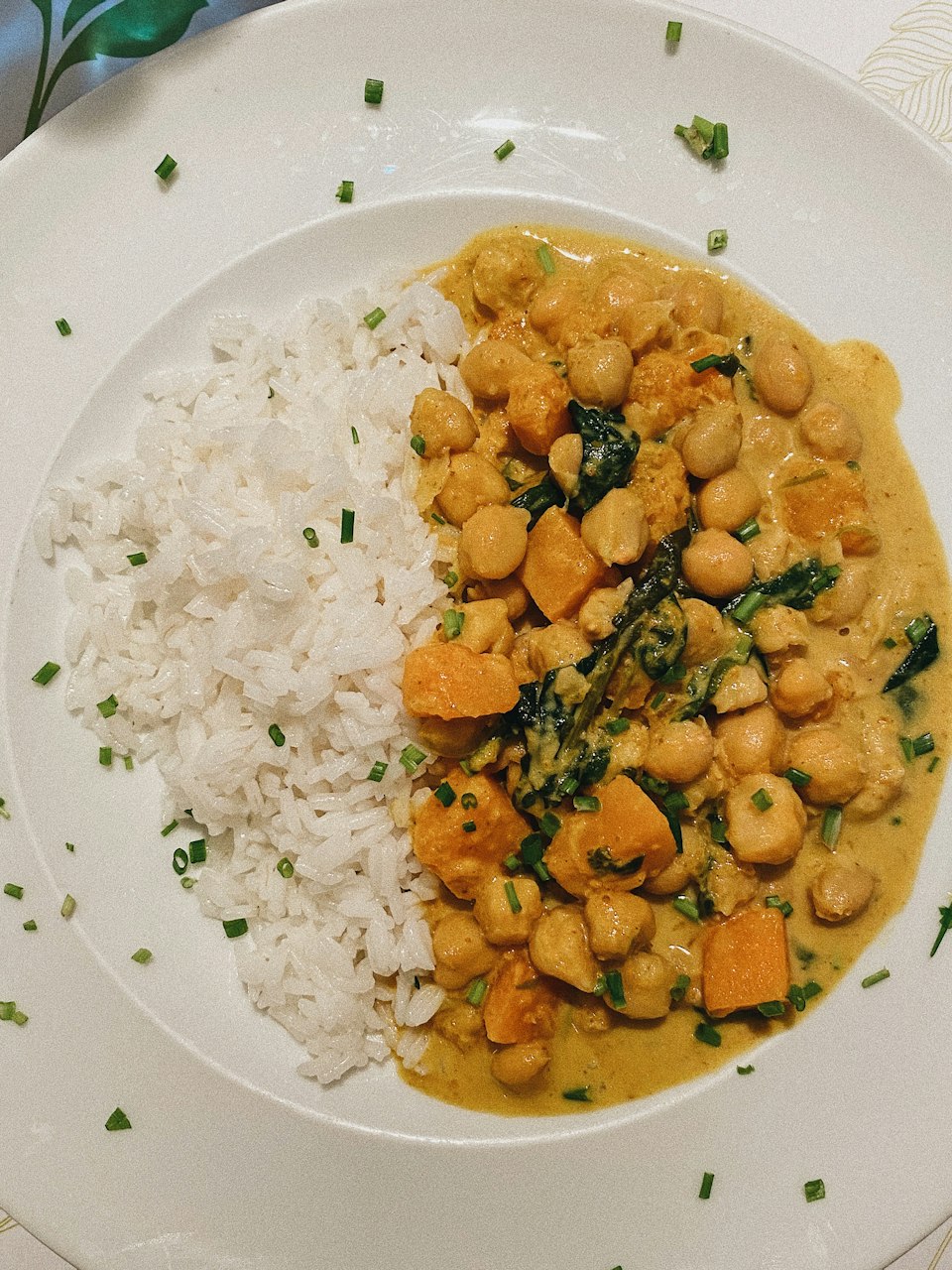
Chickpea and Spinach Coconut Curry
A pantry-friendly vegan curry of chickpeas, tomatoes and coconut milk, finished with spinach and lime. Ready in about 35 minutes.
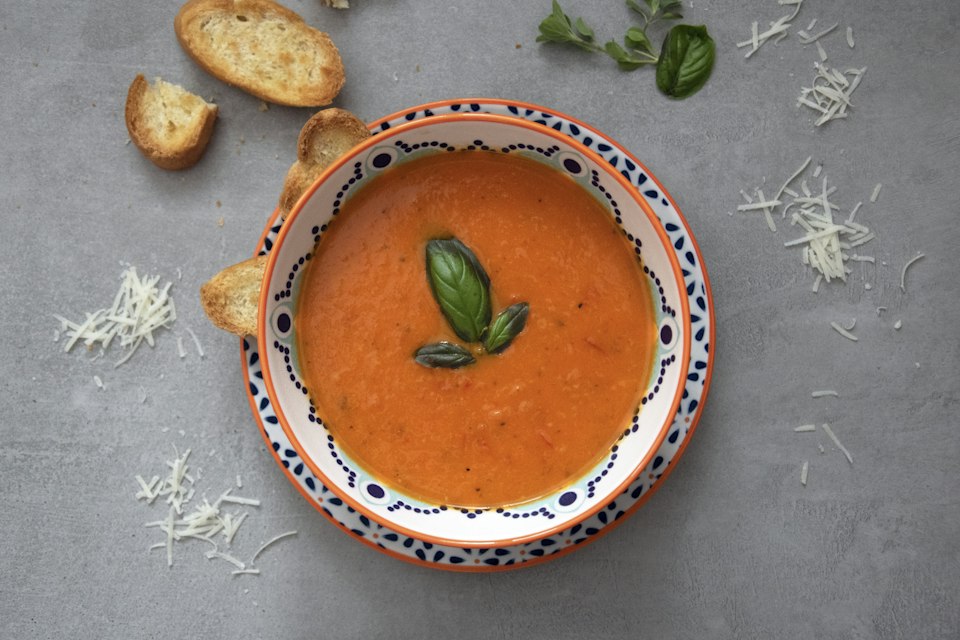
Creamy Tomato Soup
Smooth tomato soup made from canned whole tomatoes, onion and garlic, finished with cream and basil. About 40 minutes.
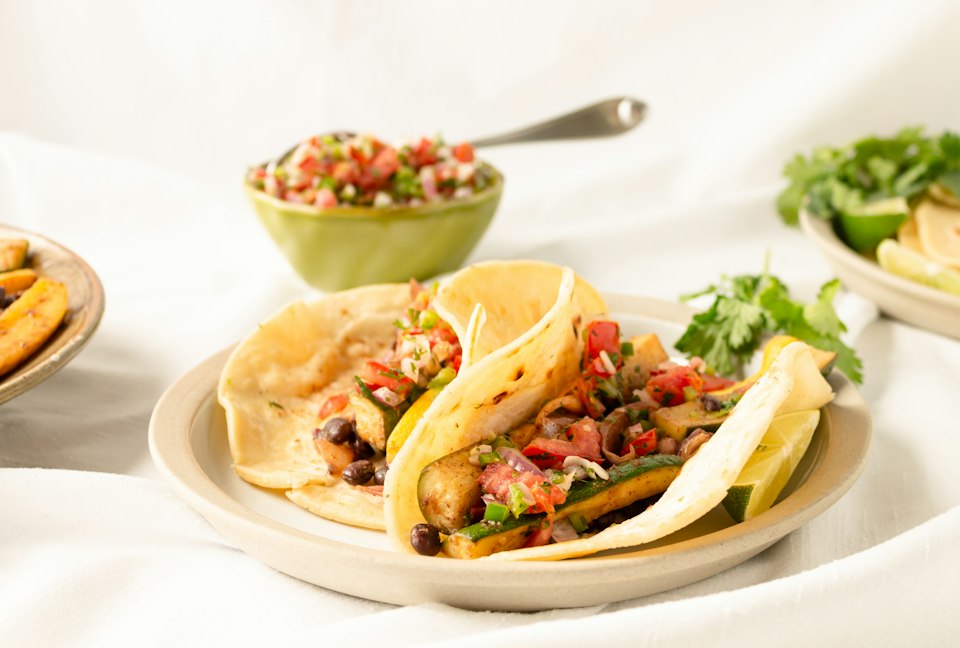
Crispy Black Bean Tacos
Pan-fried corn tortillas filled with spiced mashed black beans and melted cheese, topped with a quick lime slaw. 30 minutes.