Technique
How Long to Bake Salmon at 350, 375, 400 and 425°F
How long to bake salmon at 350, 375, 400 and 425°F, with a time chart by thickness, the safe internal temperature, and how to tell when it's done.
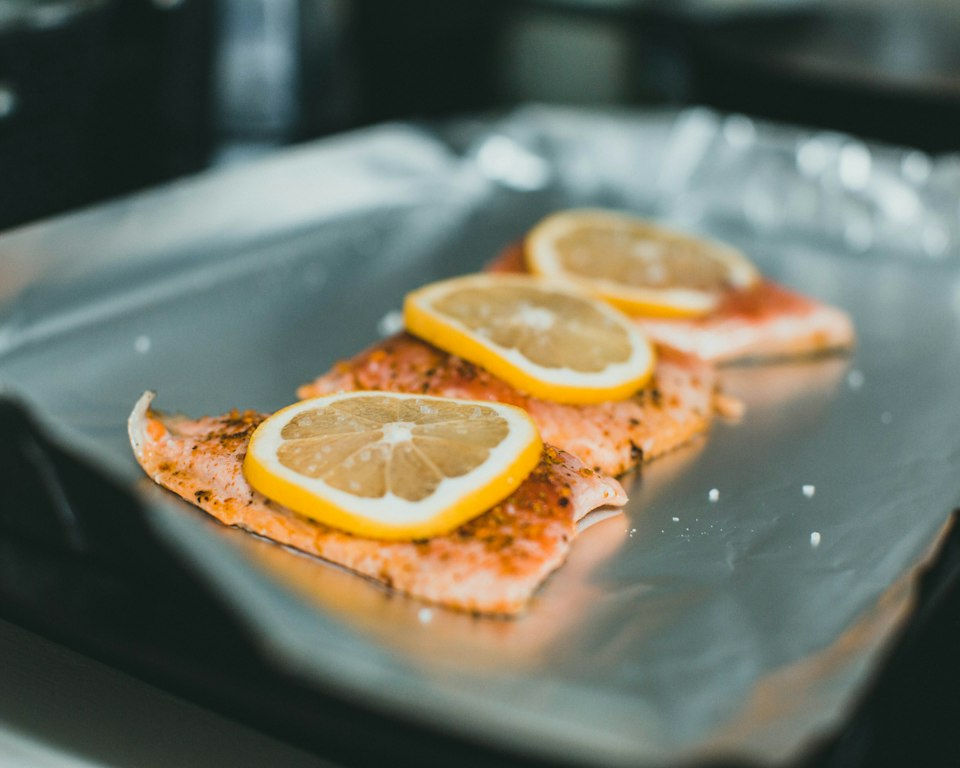
Salmon goes from moist to dry in just a few minutes, so knowing how long to bake salmon at your oven temperature is the difference between a great dinner and a disappointing one. The answer depends mostly on the thickness of the fillet, so use this guide alongside a thermometer.
Salmon baking time chart
These times are for skin-on or skinless fillets about 1 inch (2.5 cm) thick at the thickest point, taken straight from the fridge and baked on a lined sheet pan. Start checking at the low end of each range.
| Oven temperature | Approximate time | Result |
|---|---|---|
| 350°F (175°C) | 20 to 25 minutes | Very gentle, evenly cooked; good for a whole side |
| 375°F (190°C) | 15 to 20 minutes | Moist, little browning |
| 400°F (200°C) | 12 to 15 minutes | Our default: moist inside, lightly browned top |
| 425°F (220°C) | 10 to 12 minutes | Faster, more browning; good for glazes |
Adjust for thickness: thin tail pieces around ½ inch (1 cm) may be done in about half the time, while thick centre-cut pieces of 1½ inches (4 cm) can take 5 or more minutes longer. Fillets from the freezer should be thawed first for even cooking.
What temperature salmon should reach
The USDA's safe minimum internal temperature for fish is 145°F (63°C), measured in the thickest part. At that point the flesh is opaque and flakes easily.
Many cooks and restaurants take salmon out earlier, at 120 to 130°F (49 to 54°C), for a softer, slightly translucent centre, and the temperature rises a few degrees as it rests. That is a matter of preference, but it is below the USDA guideline, so we don't recommend it for young children, pregnant people, older adults or anyone with a weakened immune system. Use the temperature checker to compare your reading with the safe minimum.
How to tell when salmon is done without a thermometer
- Press the top gently with a fork. Cooked salmon flakes along its natural lines.
- The colour changes from translucent, deep orange to opaque, lighter pink all the way through at 145°F.
- White streaks of albumin, a protein, appear on the surface as salmon cooks. A little is normal; lots of white beads mean it is getting overcooked.
A thermometer is still the most reliable method and costs less than a couple of salmon fillets.
Simple baked salmon method
- Heat the oven to 400°F (200°C) and line a sheet pan with parchment or foil.
- Pat the fillets dry, place them skin-side down, brush with olive oil, and season with salt and pepper.
- Add flavourings: lemon slices and dill, a mustard-honey glaze, or garlic and herbs.
- Bake for 12 to 15 minutes for a 1-inch fillet, until it reaches your preferred doneness.
- Rest for 2 to 3 minutes before serving.
For a complete one-pan dinner with vegetables, follow our sheet-pan Dijon salmon with green beans.
Skin on or skin off?
Skin protects the flesh from the hot pan and helps it stay moist; the cooked fillet slides away from the skin easily if you don't want to eat it. For crisp skin, sear it skin-side down in an oven-safe skillet before moving it to the oven, or bake it skin-side up under the broiler for the final 2 minutes.
Storing leftover salmon
Refrigerate cooked salmon within 2 hours and eat it within 3 to 4 days. It is delicious cold, flaked over a Greek salad or grain bowl. To reheat without drying it out, warm it gently in a 275°F (135°C) oven. See how long leftovers last for more.
Food-safety source: USDA Food Safety and Inspection Service, safe minimum internal temperature chart.
Recipes from this article
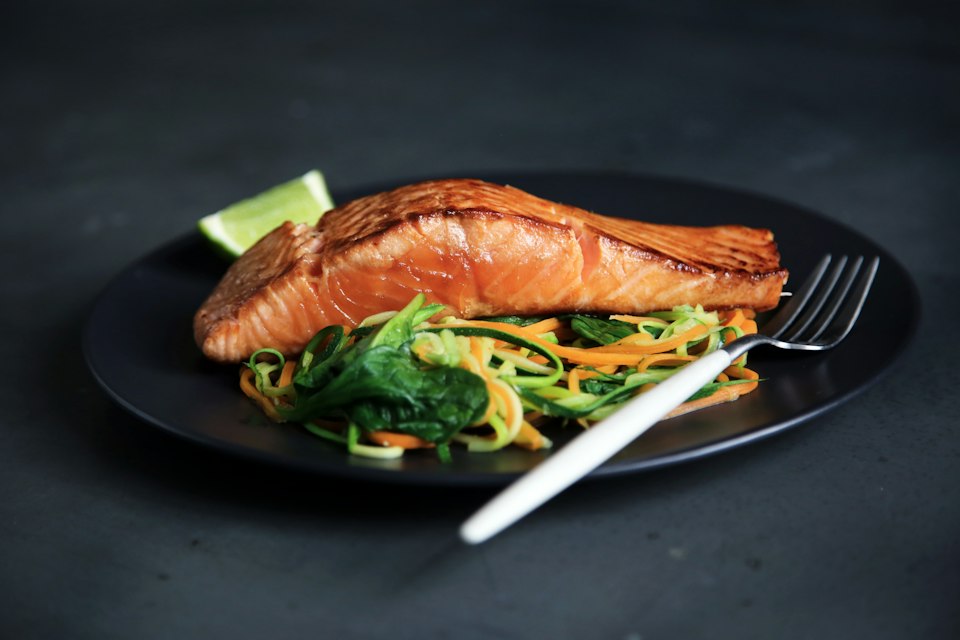
Sheet-Pan Dijon Salmon with Green Beans
Salmon fillets with a honey-Dijon glaze, roasted on one pan with garlicky green beans. On the table in about 25 minutes.
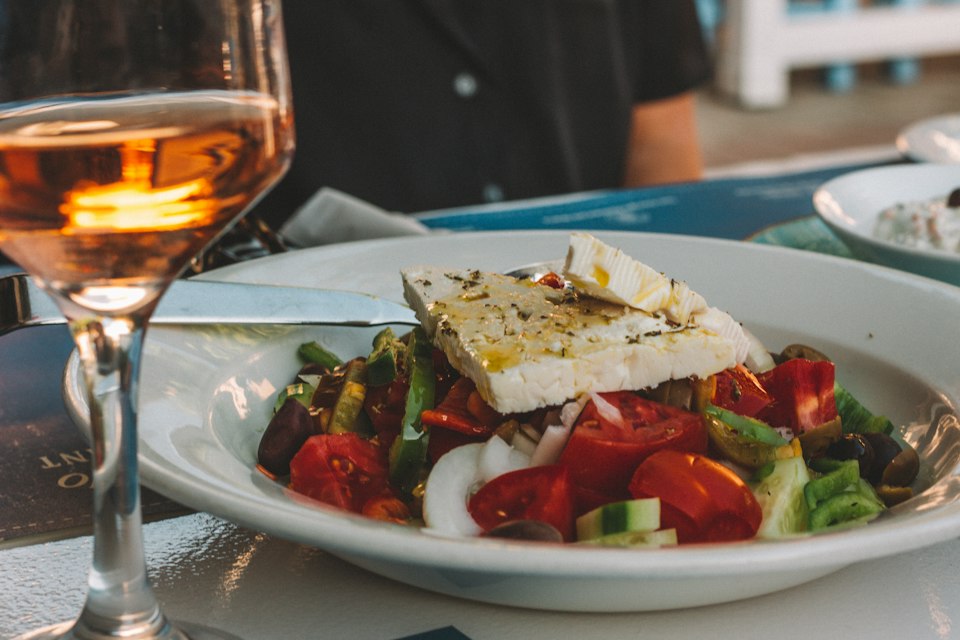
Greek Salad (Horiatiki)
The classic Greek village salad of ripe tomatoes, cucumber, pepper, red onion, olives and a slab of feta, dressed with olive oil and oregano.
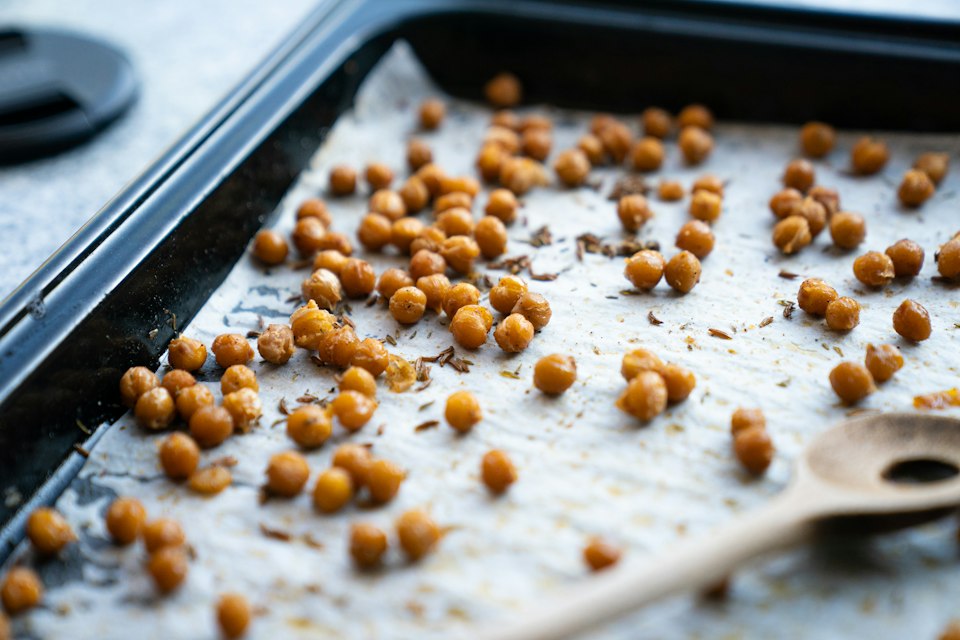
Crispy Roasted Chickpeas
Crunchy oven-roasted chickpeas seasoned with smoked paprika, garlic and cumin. A pantry snack in about 35 minutes.
More from the blog
How to Cook Rice on the Stove (Fluffy Every Time)
How to cook rice on the stove: water ratios for white and brown rice, timing, why resting matters, and how to store cooked rice safely.
How to Hard Boil Eggs That Are Easy to Peel
How to hard boil eggs with tender whites and no green ring, two reliable methods, a timing chart for soft to hard yolks, and tips for easy peeling.